Wheel Spin
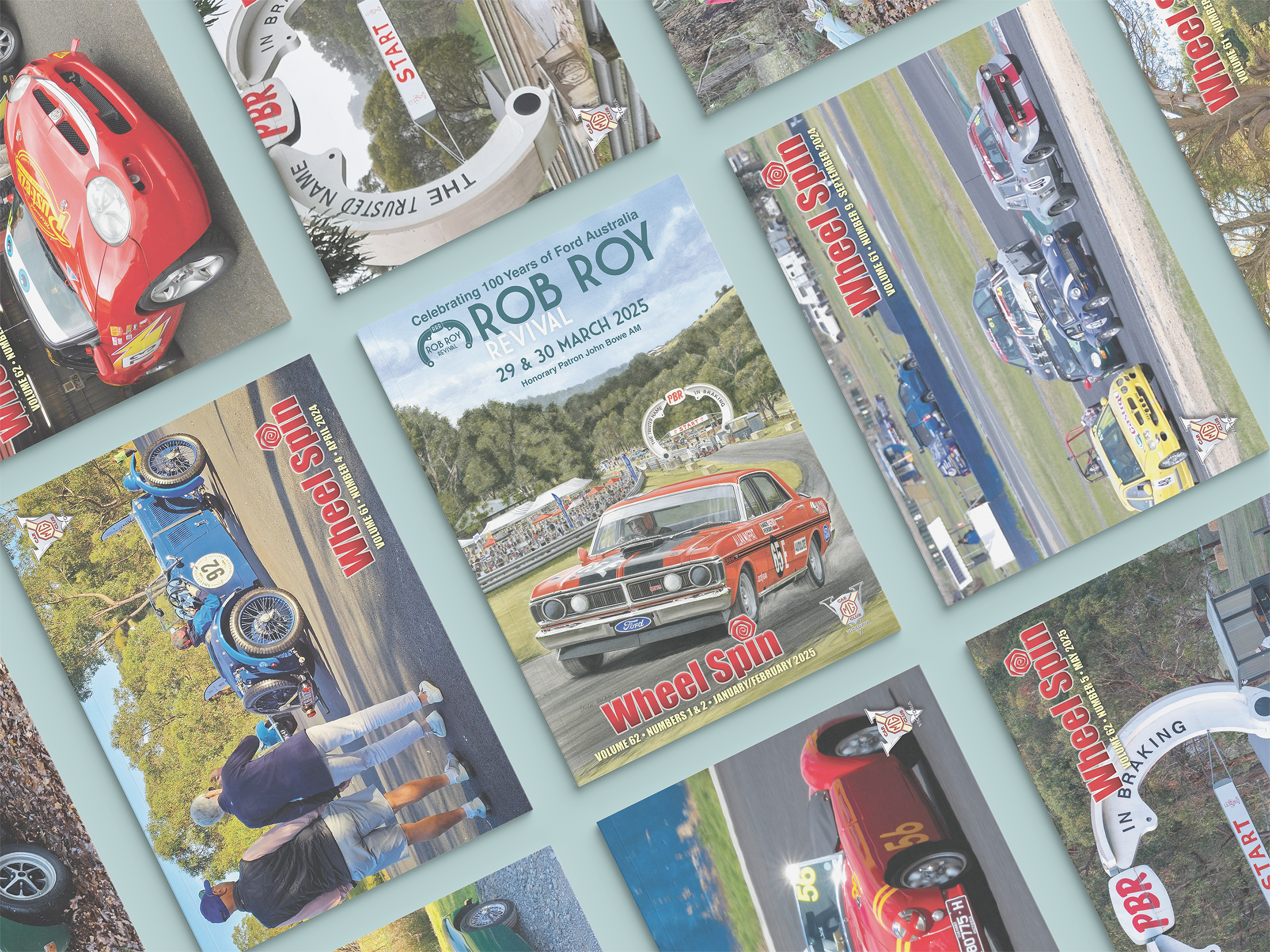
Wheel Spin is the official monthly magazine for the MG Car Club Victoria, created to inform and connect club members to share their passion and knowledge. Published monthly, each 64-page A5 issue delivers a diverse mix of content that keeps the community engaged and inspired.
Design Approach
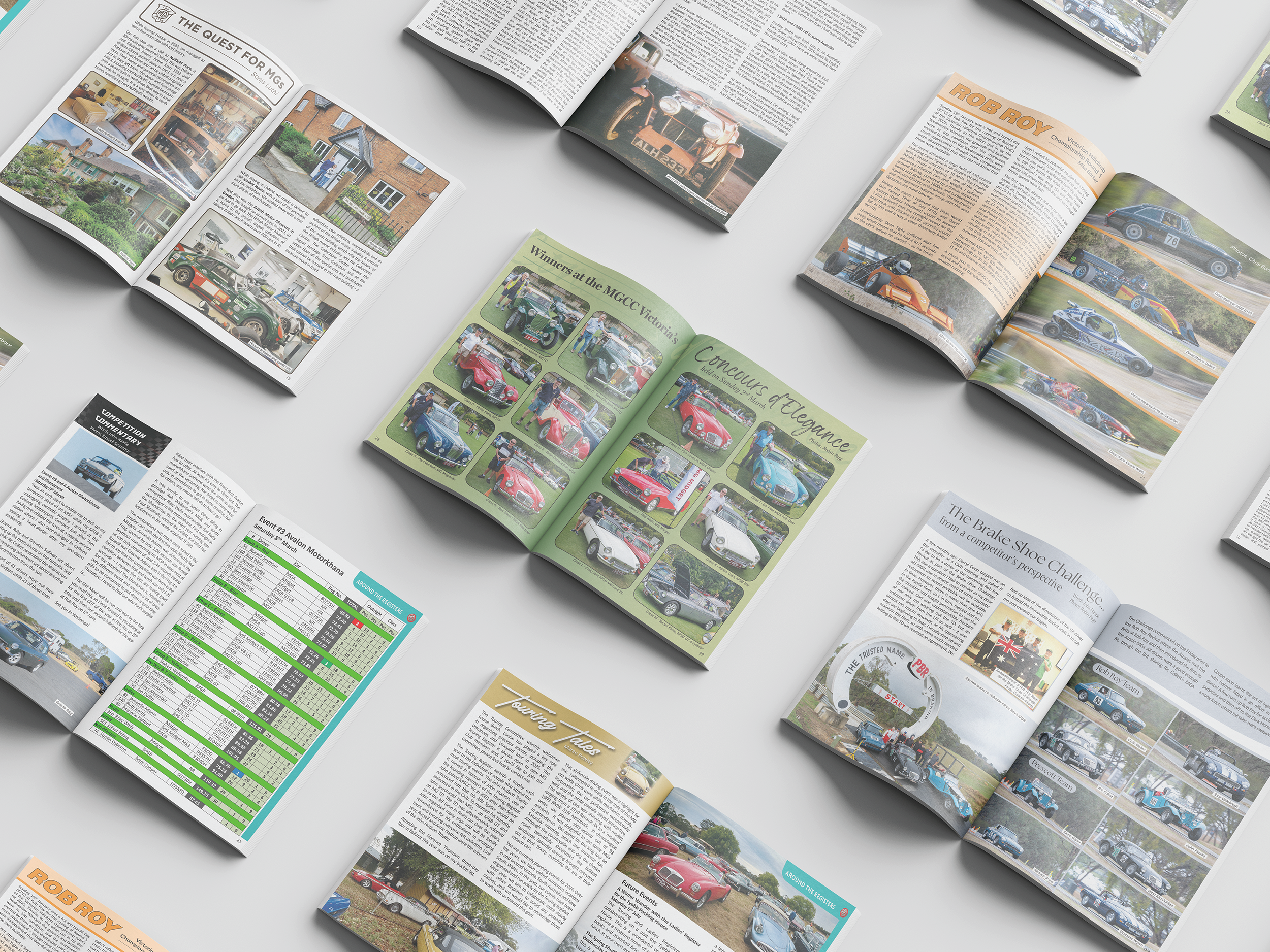
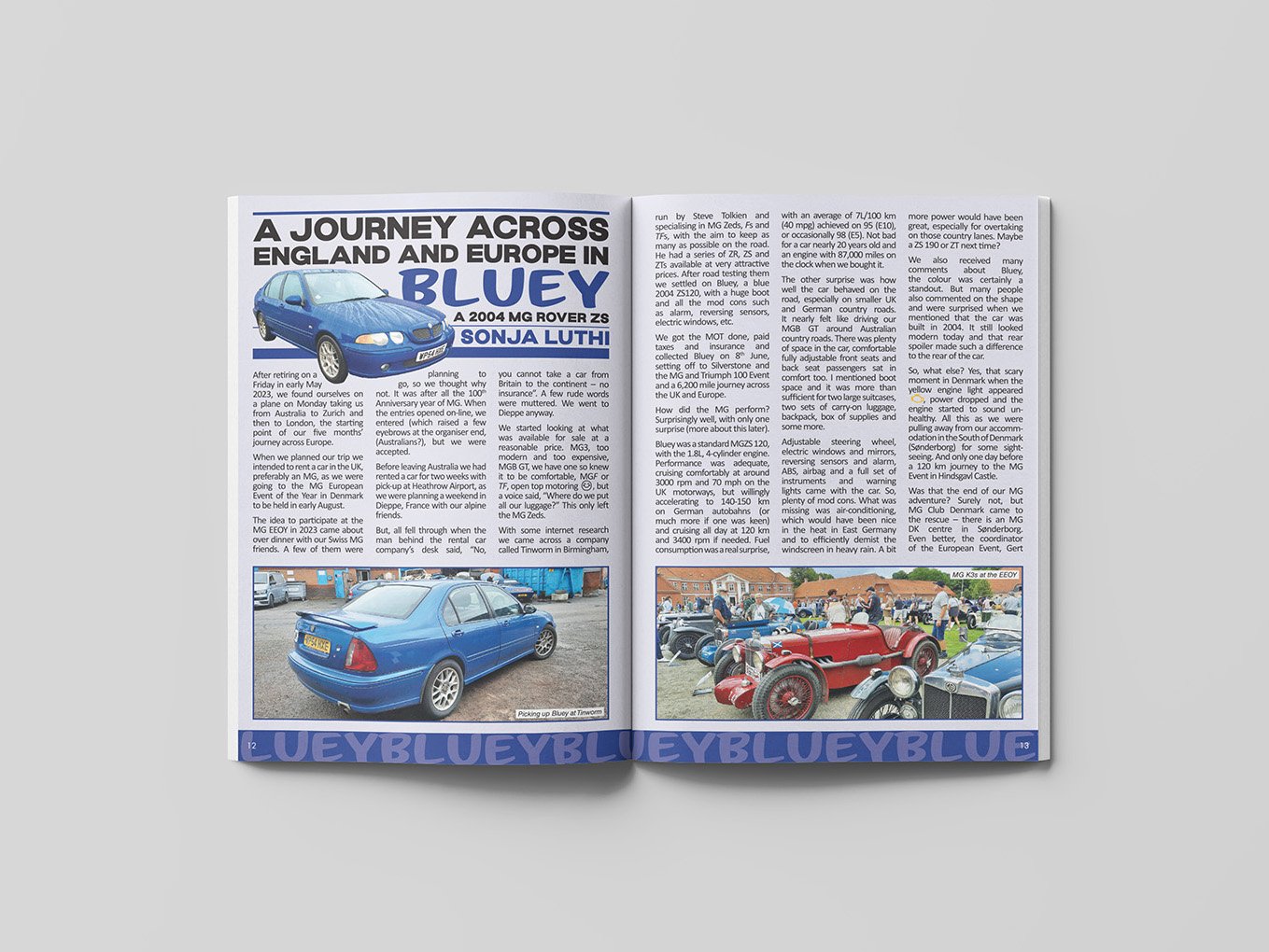
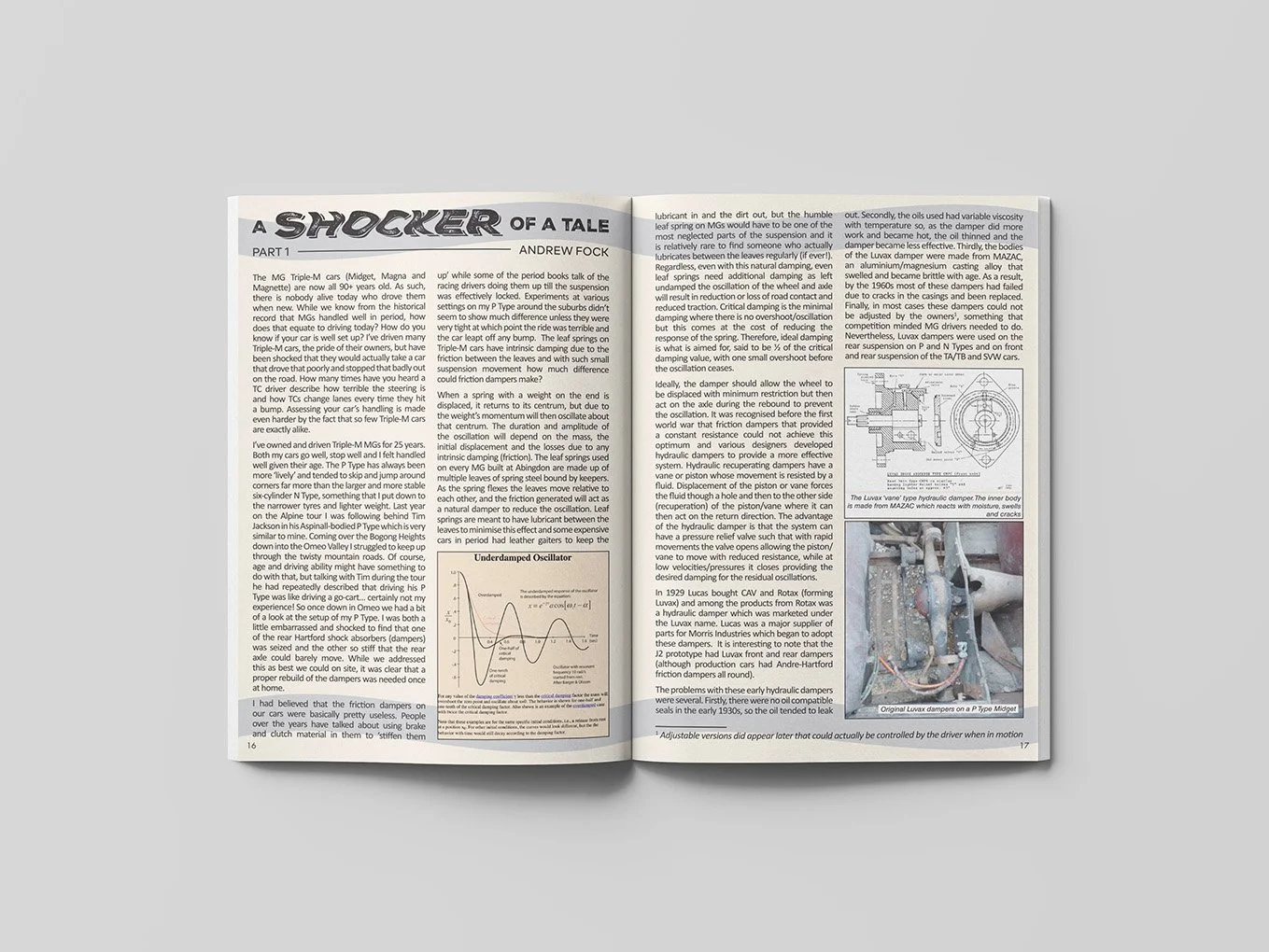
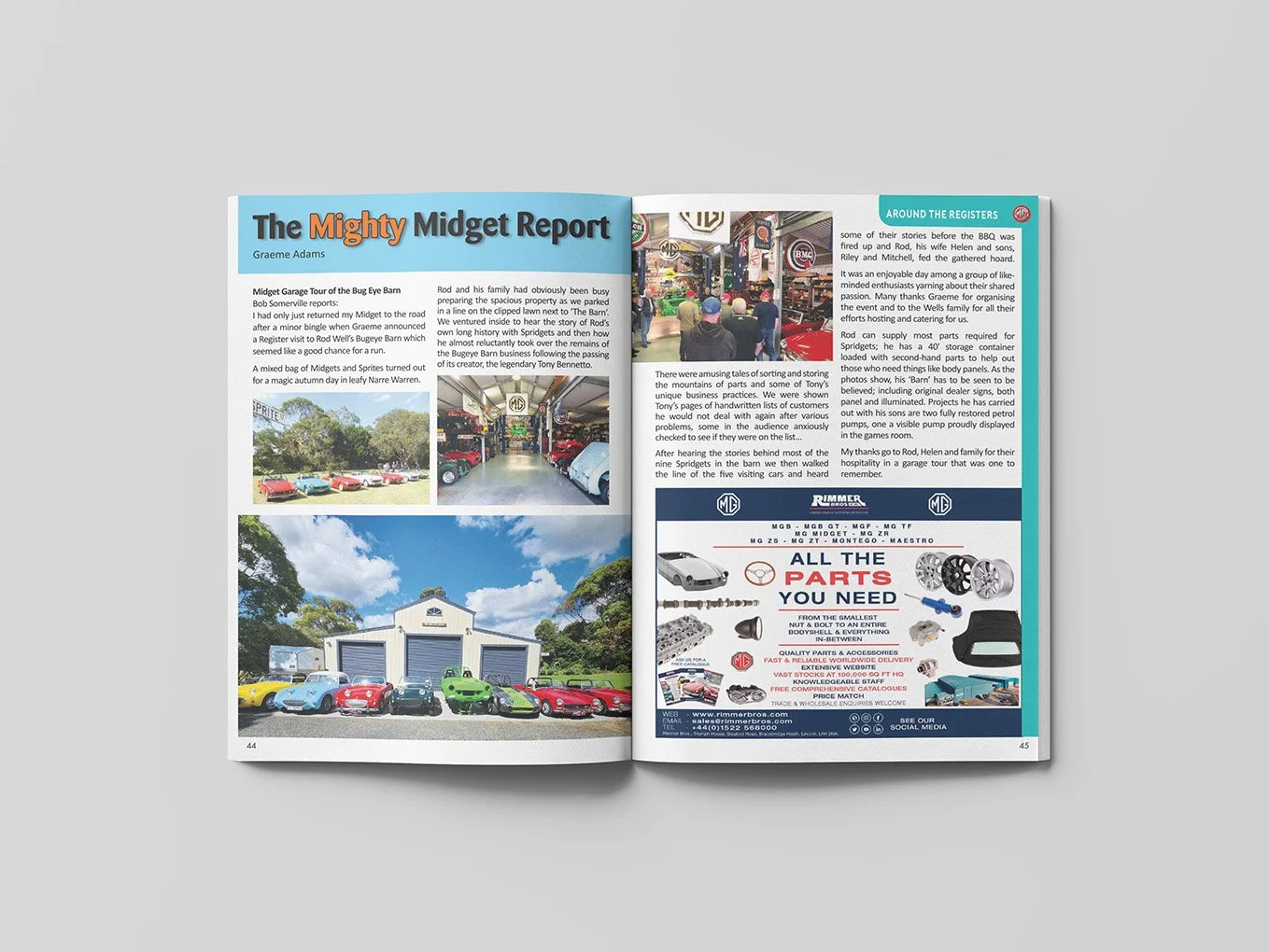
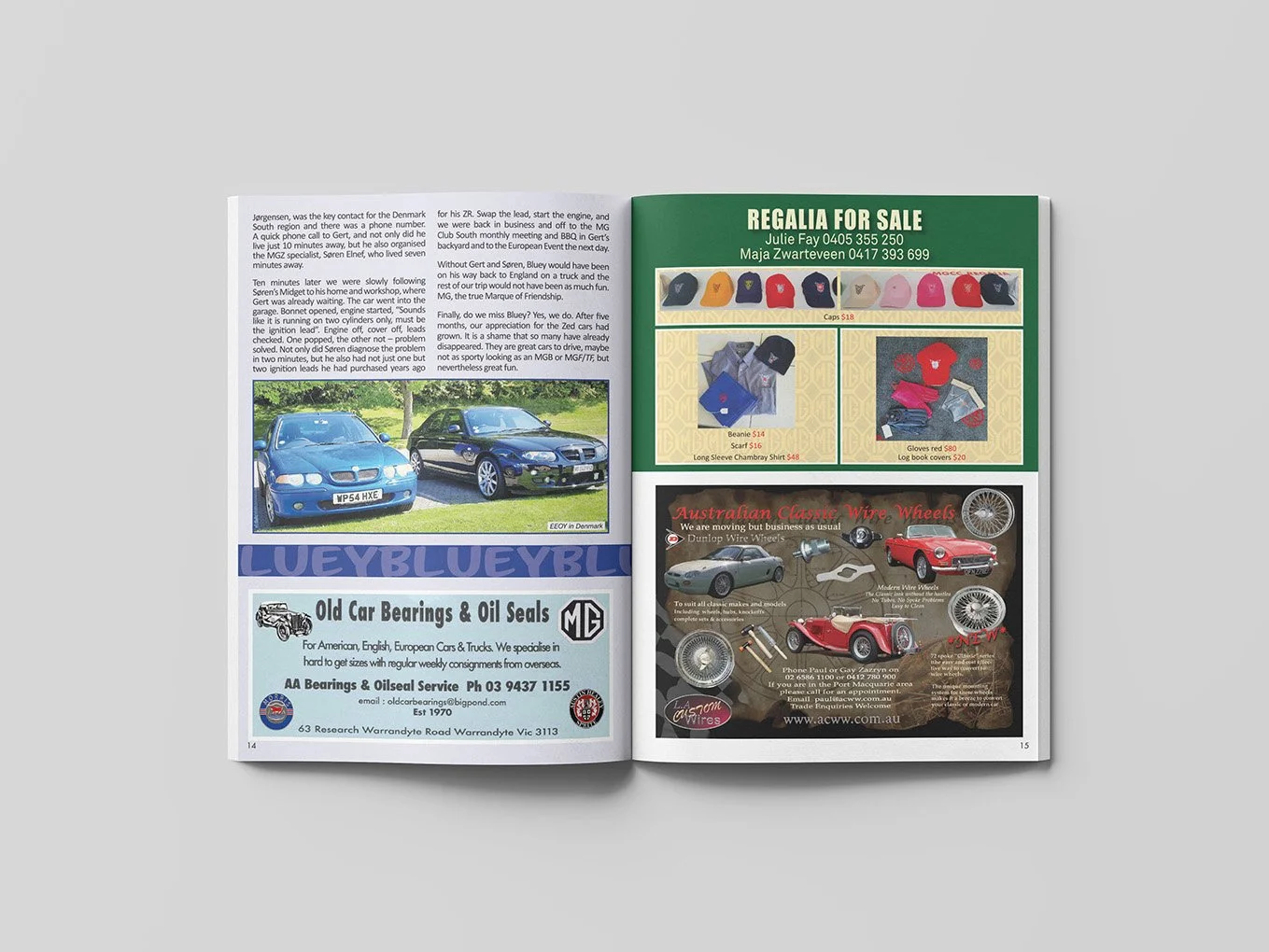
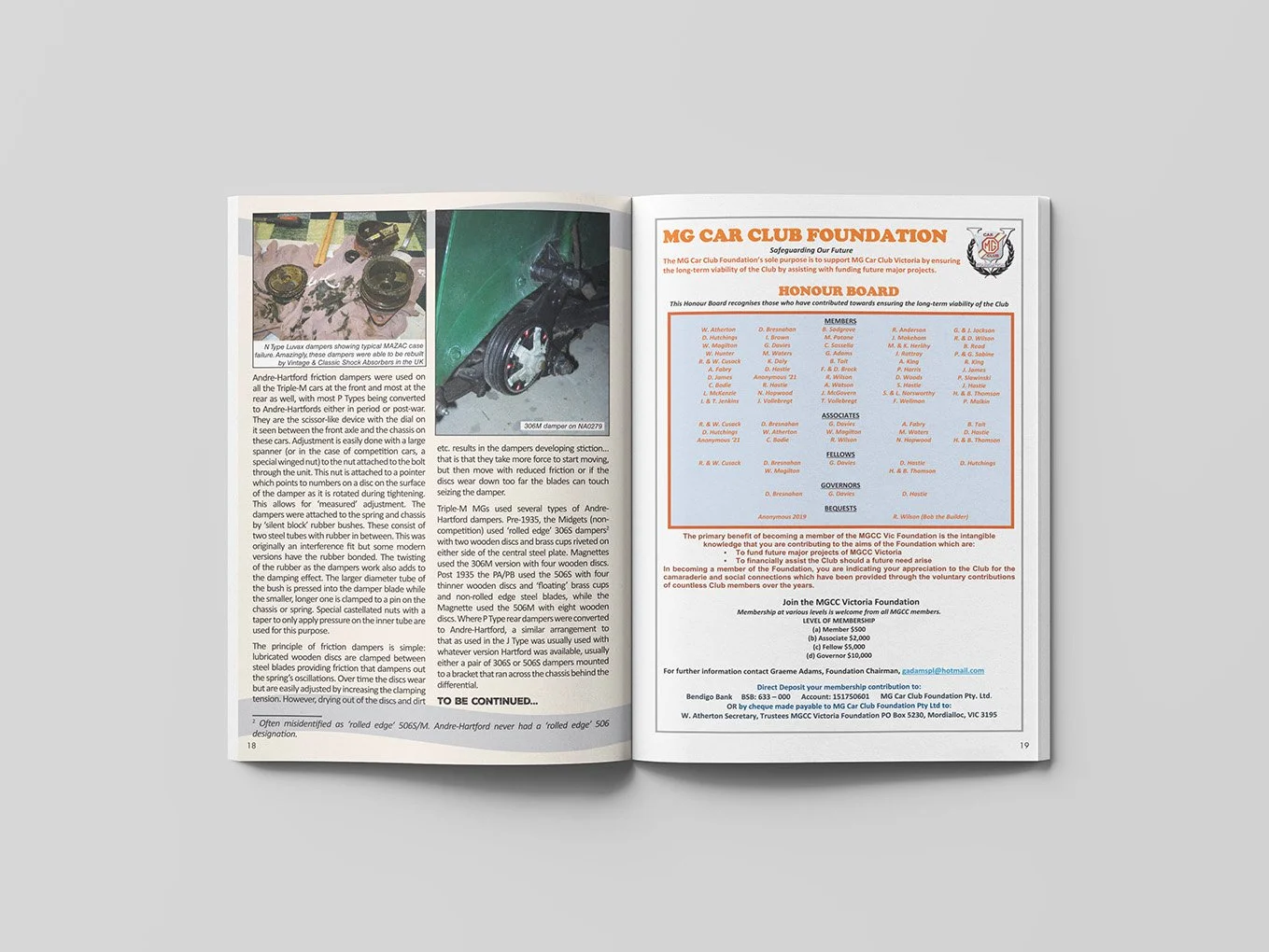
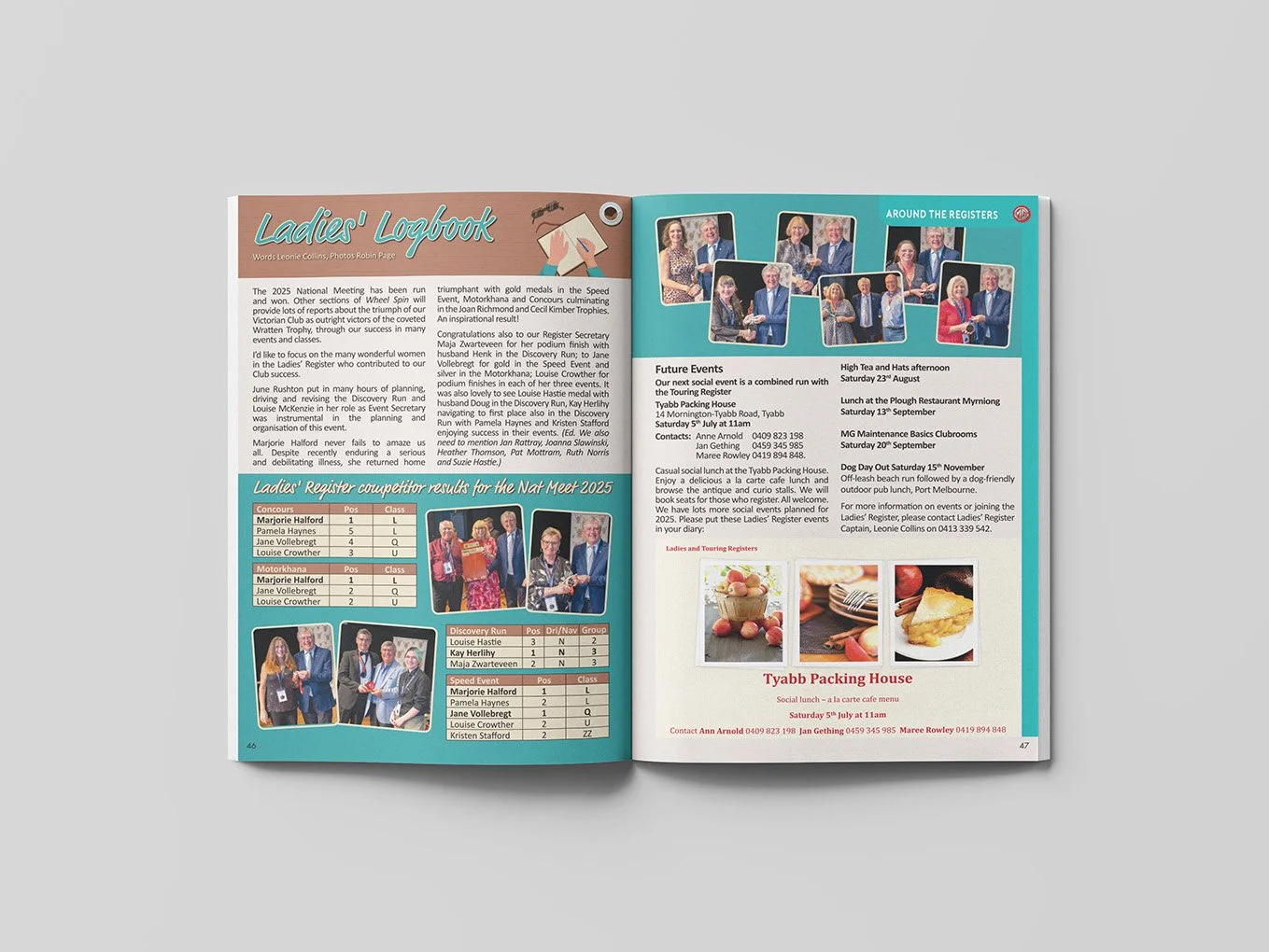
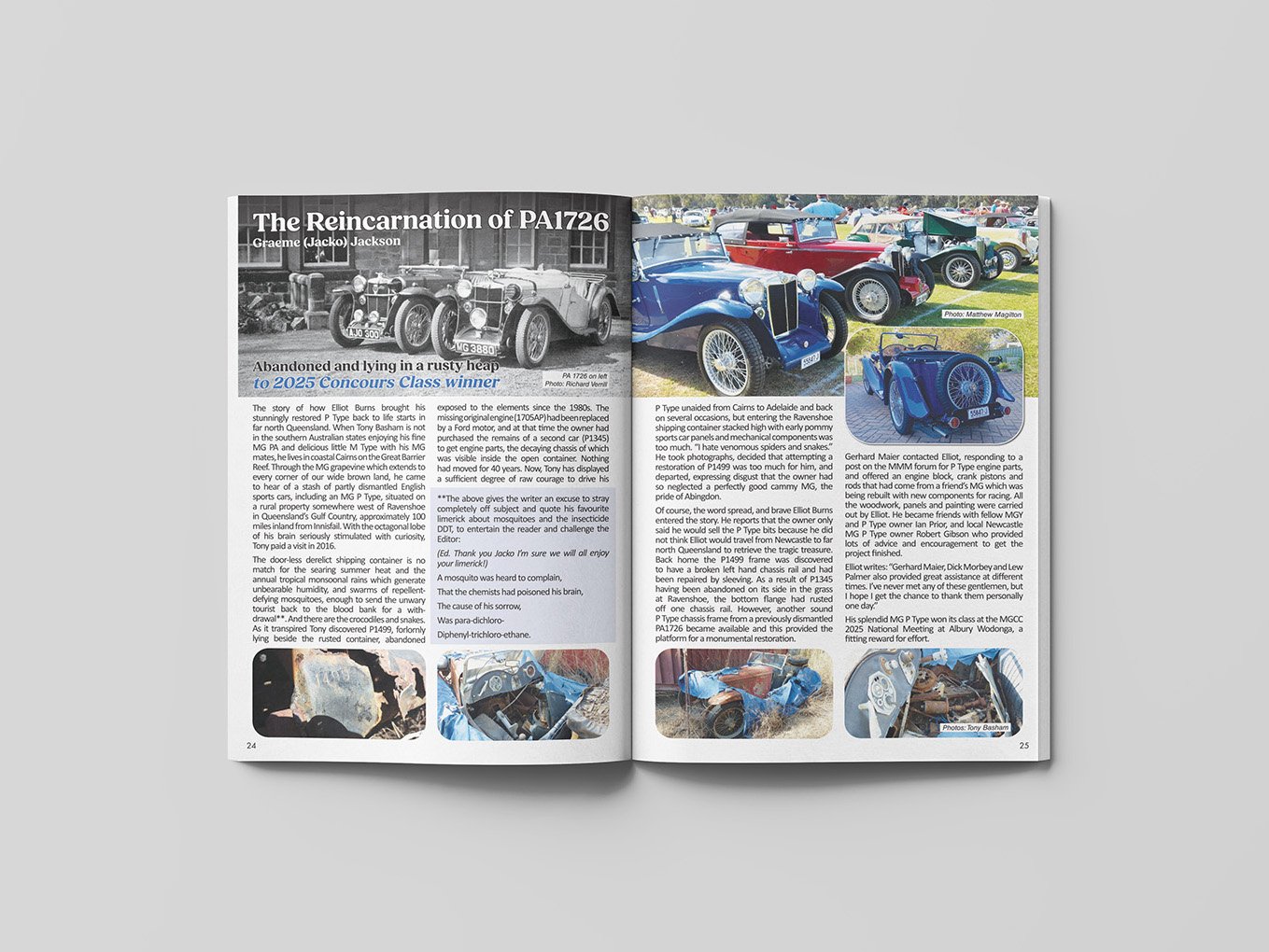
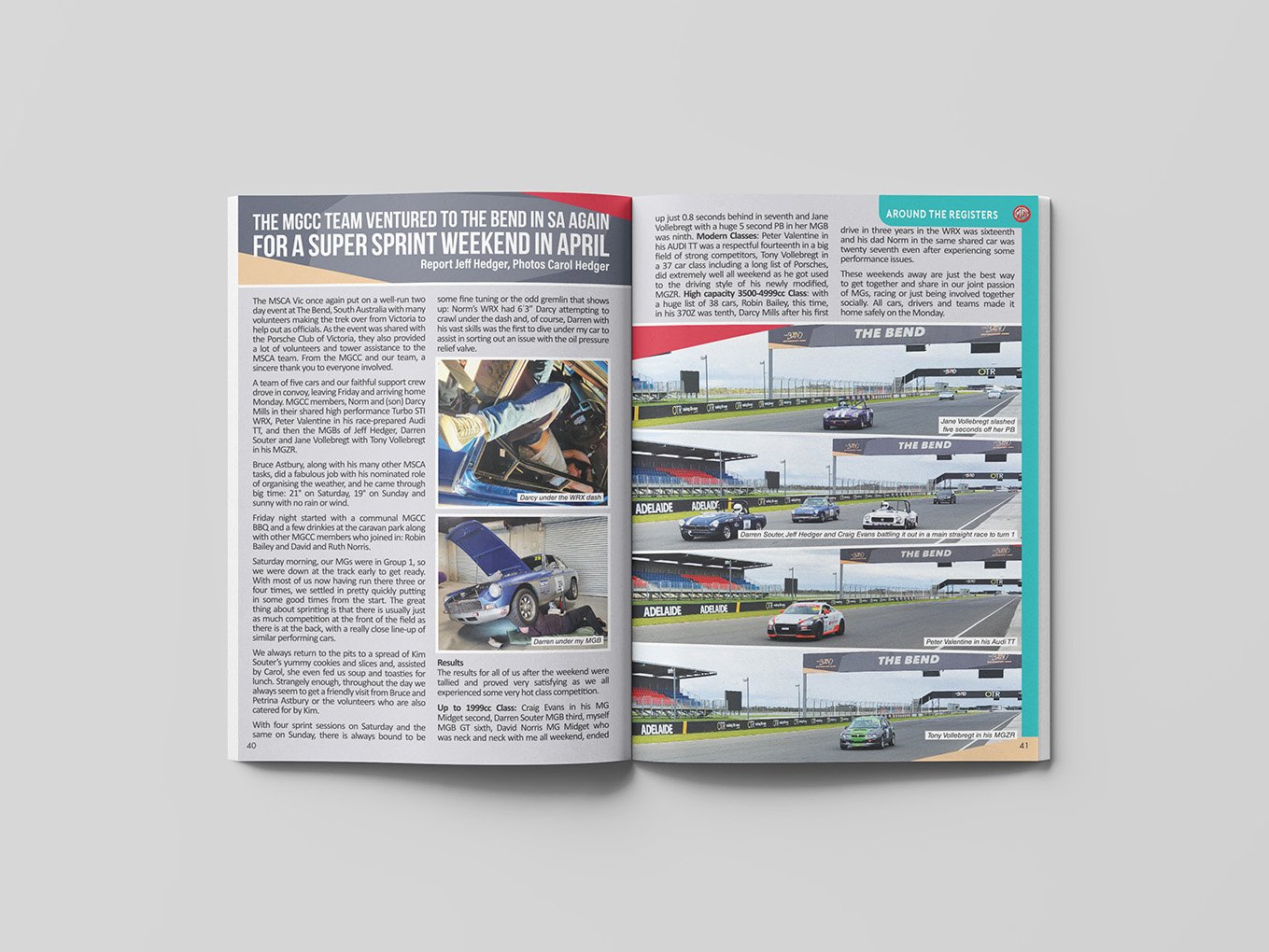
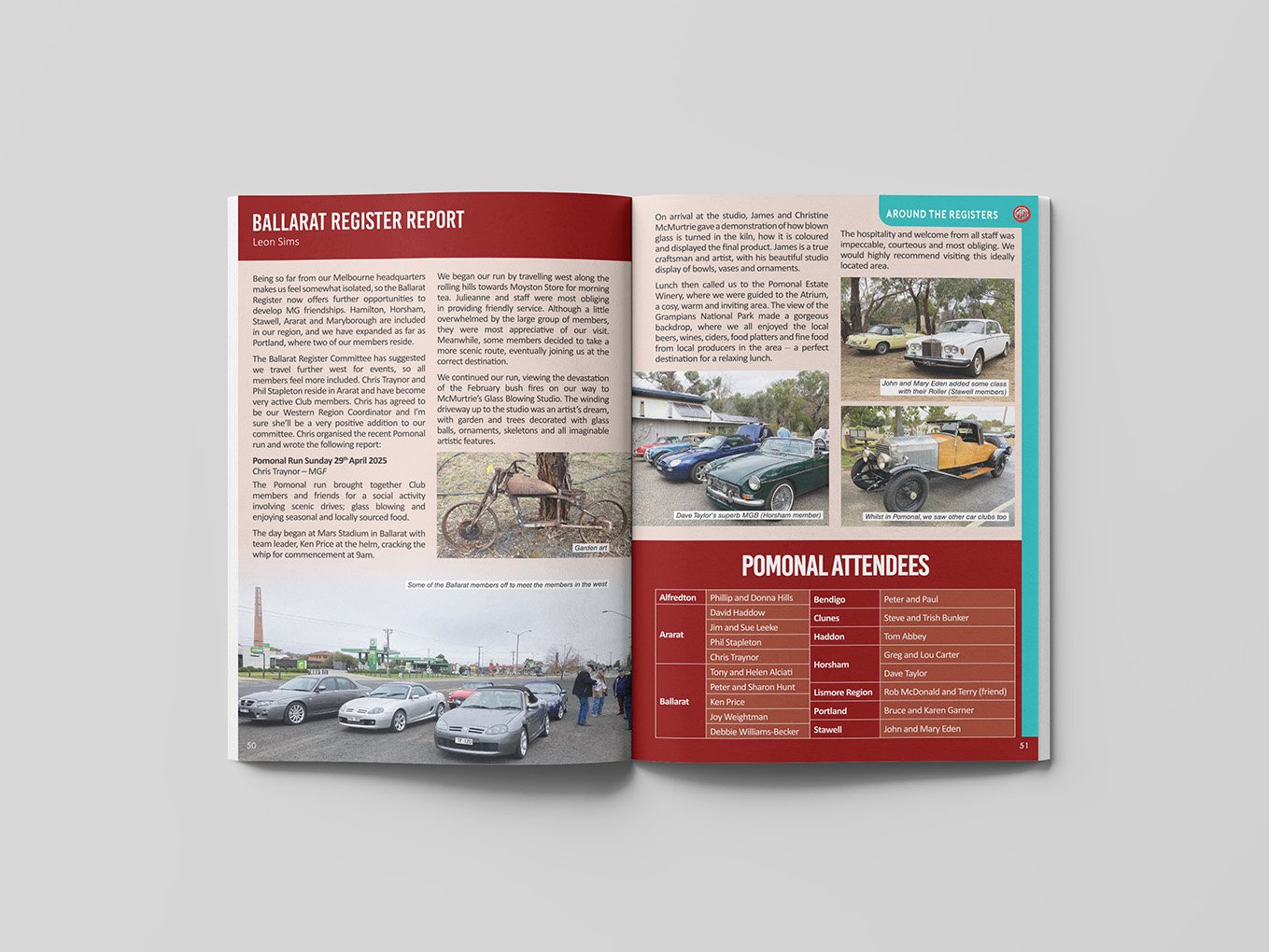
My design approach focuses on maintaining a clean and consistent visual style to create familiarity, while giving each article a distinctive and engaging look to keep the content fresh. Clear visual hierarchy is essential throughout the publication to support the storytelling of each article and ensure ease of navigation. This is achieved through legible typography, engaging imagery and thoughtful layouts that guide readers through the content. Each design decision is made with the audience in mind.
Design Process
I worked closely with the Editor, who provided the written content and imagery sourced from Club contributors. The layout process remained flexible to accommodate various articles lengths, image quality and quantity. I also adapted to occasional requests on image size, placement or page count.
A structured proofing process was included in the schedule to review the magazine’s overall flow, consistency and visual alignment. It also gave the Editor full transparency to view the articles and layout in context and provide changes or corrections. This collaborative approach ensured confidence in the final design and helped meet the strict monthly deadline in place, even while managing other priorities.
Once approved, the magazine was set up for both print and digital use.
Each edition typically includes:
A comprehensive Club Calendar to keep members informed of upcoming register events, club meetings, social gatherings and major activities.
Recaps of Recent Events that are brought to life through engaging articles and imagery that captures the energy of each occasion.
A variety of Member Stories, including domestic and international adventures with their pride and joy, historical insights, maintenance tips and restoration projects.
Register Reports that highlight events and share stories tailored to specific MG model groups.
A Buy & Sell section featuring MG cars and parts for sale or wanted by the community.
Challenges
Managing inconsistent or low-resolution assets from contributors was a consistent challenge. Common issues included incorrect file types, awkward photo angles or low-quality images taken on mobile devices. Depending on the extent of the issue, I would edit the images in Photoshop, adjust the scale within the layout or omit them entirely if they compromised the layout.
For logos and brand assets, I kept a library of high-resolution materials or sourced suitable replacements as needed. Most importantly, I provided feedback to the Editor and contributors on how to supply usable assets, which over time, improved magazine quality and streamlined workflow.
Awards
In 2025, Wheel Spin was awarded 2nd place for the Best Magazine Award across all MG clubs in Australia, acknowledging not only the passion and dedication of the Club and its contributors, but the delivery of the magazine’s engaging design and high standard.
Technical Skills
Adobe InDesign for layout design, applying master pages and paragraph/character styles to maintain consistency and support workflow efficiency.
Adobe Photoshop for image preparation and editing: format conversion, retouching, resizing and photo adjustments.
File preparation for both print and digital distribution.
Structured proofing process that involves reviewing visual alignment and layout consistency, alongside amendments provided by the Editor.
Time and workflow efficiency to meet strict monthly deadlines while balancing multiple projects.
Asset management, maintaining a library of high-resolution brand materials and sourcing or replacing low-quality assets.
Professional Skills
Clear communication with the Editor to collaboratively manage content, layout feedback and final approval.
Constructive feedback, providing guidance to contributors to improve the quality of image submissions and over time, led to a smoother workflow.
Feedback-driven collaboration, welcoming critique and improvements to enhance both workflow and final design outcomes.
Time and priority management, consistently delivering under tight deadline while balancing other projects.
Attention to detail, ensuring visual consistency, correct formatting and professionalism across each edition.
Continuous improvement mindset, refining design processes and assisting with elevating contributor standards through guidance.
User-focused design, considering the audience’s needs and preferences to engage and inform.
Design Skills
Editorial Design of a 64-page monthly publication with varied content, reusing templates and paragraph/character styles to streamline workflow and maintain consistency across each issue.
Consistent yet flexible visual style, giving each article a distinctive look while preserving the magazine’s cohesive identity.
Thoughtful use of typography, imagery and visual hierarchy to support the storytelling of each article and navigate readers through the content.
Creative adaptability in generating layouts that accommodate varying article lengths, image quality and quantity, as well as occasional requests on image size, placement or page count.
Problem-solving by adapting layouts to accommodate low-resolution or inconsistent contributor imagery without compromising quality.
Photo retouching and preparation to ensure high-quality visuals throughout the publication.
Reflection
Designing Wheel Spin strengthened my ability to create engaging and consistent layouts for an ongoing publication with both flexibility and purpose. It developed my technical and creative skills and taught me how to navigate real-world challenges, such as variable content and strict deadlines, while maintaining a high-quality result. It also structured my collaborative approach, showing me that clear communication and constructive feedback can improve submission quality and streamline workflows. Most importantly, it deepened my appreciation for balancing structure and creativity in editorial design, and the value of thoughtful, user-focused layouts in engaging and informing a community.